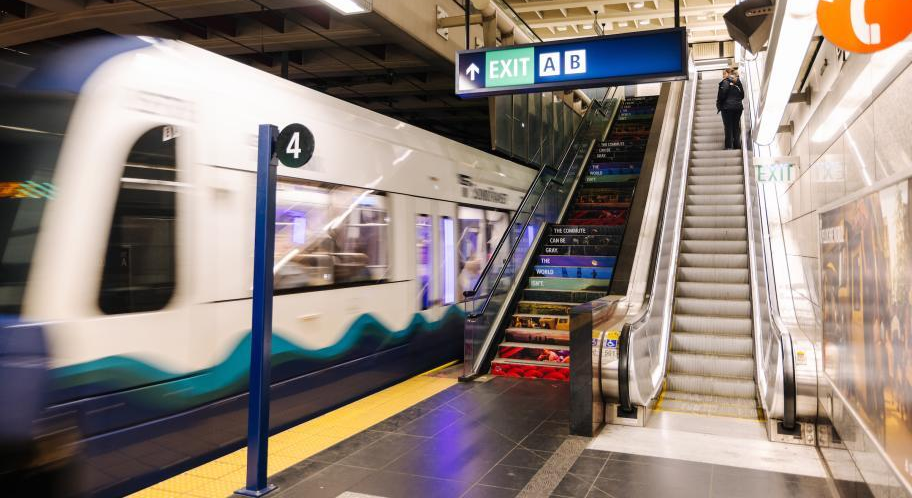
How Sound Transit Uses Knaq to Get Ahead of Failures Across 274 Elevators & Escalators
Sound Transit paired Knaq's real-time data platform with their own rigorous maintenance operation to reduce overall elevator and escalator unreported time by 90%, while using predictive alerts to find issues before they cause failures and trigger costly repairs.

Before Knaq, outage reports came through a game of telephone: wrong station, wrong unit, elevator reported as an escalator. Hours were lost chasing bad information.
Now, when leadership asks why a unit was down, the team has a precise answer. They can present that a specific unit has 98% uptime, while providing a detailed report on downtime through the categorization of each outage and duration. The platform gives the team the data to make informed business decisions.
"When we start seeing an increased number of elevator re-levels, it can be an indicator that there is an issue with the valve . With Knaq, we get ahead of it and turn what would be an emergency repair with extended down time into a minor adjustment or repair on our timeline"
Sound Transit
Challenge
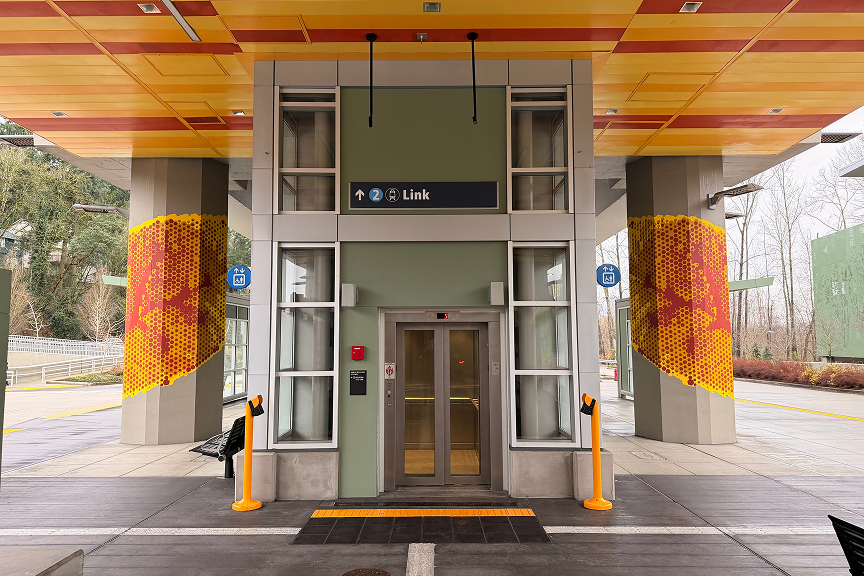
Sound Transit operates one of the most heavily used transit systems in the Pacific Northwest, with 274+ elevators and escalators across their light rail system. Before Knaq, the team had no unified visibility into equipment status. They relied on manual processes, CCTV review, and passenger complaints to identify issues. Equipment failures were discovered after the damage was done, often resulting in extended downtime and emergency repairs.
The equipment itself was a challenge: old units, new units, different manufacturers, different controllers, different everything. Most monitoring solutions were OEM-dependent and could not work across the entire fleet. Sound Transit needed a platform that could monitor any equipment, regardless of age or manufacturer, and deliver real-time data to their operations and maintenance teams.
Solution
Sound Transit deployed Knaq's monitoring platform across their entire fleet of elevators and escalators. The team gained instant visibility into equipment status, runtime behavior, and performance trends through a single dashboard.
As Nick Champion, Sound Transit Senior Business Analyst, puts it: "We have old stuff, new stuff, different vendors, different controllers, different everything. Knaq's ability to be on any type of equipment made it an easy choice."
But the real value came from what Sound Transit did next. When equipment failed, the team began reviewing the Knaq data leading up to the failure to identify the patterns that preceded it. They turned those patterns into predictive alerts. Now, when any unit exhibits the same behavior, they get an early warning and can schedule a repair before the failure ever happens.
One example: the team noticed hydraulic elevators re-leveling more frequently than normal relative to their trip count. By reviewing past failures, they identified this as a leading indicator of valve degradation. Left unchecked, a failing valve means an increased potential for additional cost and unscheduled downtime.
The same process applies across every failure type the platform detects: door operators cycling abnormally, escalators being restarted repeatedly without maintenance being notified, motor starts accumulating at unusual rates. Each incident becomes a data point, a lesson, and eventually a predictive alert.
Today, Sound Transit can always tell you the exact status of every elevator and escalator in its system. Not because someone reported it or someone checked the cameras. But because the data is live and always on. Sound Transit has transitioned from an operation struggling to track problems to one that is highly informed and initiative-taking in its efforts.
See how your facility can reduce unplanned downtime with Knaq
Whether you operate an airport, transit system, hospital, or university, the challenge is the same. Knaq gives you the visibility to prevent failures before they happen.